
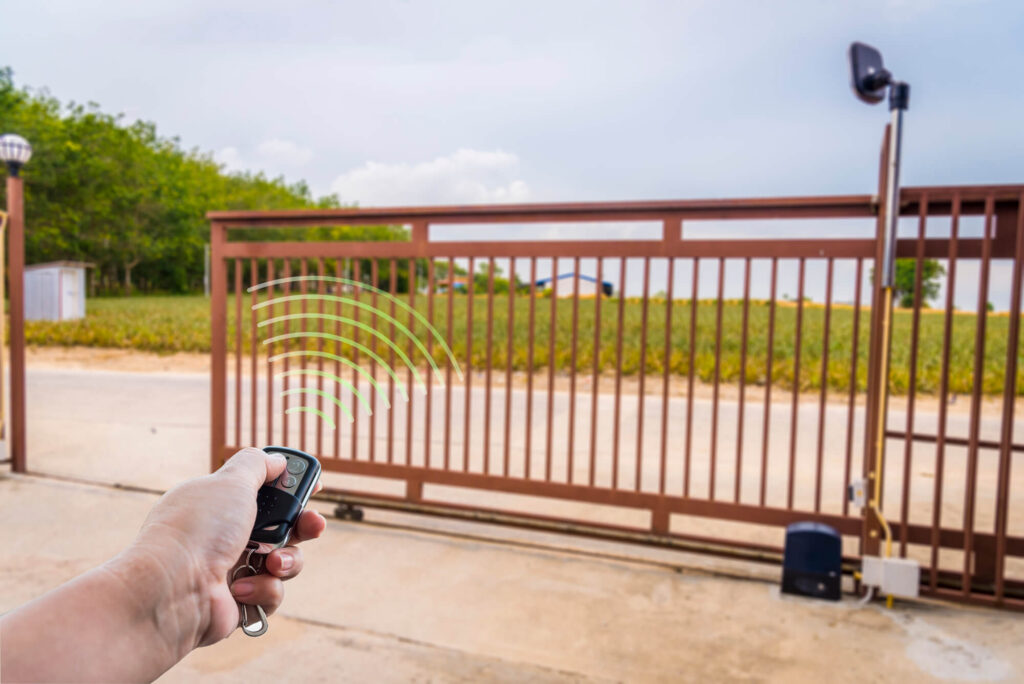
If your automatic gate will not open with a storm on the way, do not force it or try to beat it through the opening: use the manual release so you can move the gate by hand, keep everyone clear of it while it moves, and get the operator checked once the weather passes.
A gate that will not open is an inconvenience on a normal day. With a storm coming, it can block a car you need to move, a delivery of supplies, or your own way out.
Power flickers, a dead backup battery or a gate pushed out of line by wind can all leave an automatic gate stuck at exactly the wrong time.
At Big Easy Gates, we install and repair automatic gates across the New Orleans area, and we see the same storm-season calls every year.
This guide covers what you can safely do yourself, the signs that mean you should stop, and how to get ahead of the problem before the next storm. If your gate needs attention, contact us and we will help you get it working.
Why Do Automatic Gates Fail Right Before a Storm?
Most of the time, the timing is not bad luck. The same conditions that come with a storm are the ones that stop gates.
The first is power. When the electricity drops, an automatic gate that runs on household current stops with it, unless it has a working backup battery.
The second is the backup itself. Many gate operators include battery backup.
The Chamberlain owner’s manual for one of its commercial slide gate operators, for example, lists built-in battery run as a standard feature. A battery that has quietly worn out over the year will not carry the gate when you finally need it.
The third is the gate. Wind, debris and saturated ground can push a gate out of line or block its path, so the operator senses resistance and stops. If you want to understand those faults in more detail, our guide on why an electric gate stops mid-swing walks through them.
Storm season is long here. NOAA’s National Hurricane Center lists the Atlantic hurricane season as June 1 to November 30, with the peak on September 10 and most activity between mid-August and mid-October.
How Do You Open an Automatic Gate by Hand?
Almost every automatic gate operator has a manual release that disconnects the motor so the gate can be moved by hand. Finding it before you need it is the single most useful thing you can do.
 Start with your owner’s manual. The release looks different from one operator to the next, and the manufacturer’s instructions are the ones to follow.
Here is how it works on two common operators:
- On a Chamberlain slide gate operator, the owner’s manual says to place the MANUAL RELEASE switch in the down position, which removes power to the motor so the gate can be opened by hand.
- On a USAutomatic Patriot swing gate operator, the manual refers to an emergency release, or manual release, pin and tells owners to verify that it can be easily removed.
Once the release is engaged, follow these steps:
- Make sure no one is near the gate, including children and pets, and no vehicle is in its path.
- Engage the manual release exactly as your operator’s manual describes.
- Move the gate slowly by hand, watching for anything catching on the track, hinges or ground.
- Secure the gate in position if wind could swing or roll it while it is released.
- Re-engage the operator only when power is back and the gate path is clear, following the manual.
If the gate will not move even with the release engaged, stop there. Something mechanical is binding, and forcing it can bend the gate or damage the operator.
Sliding and swing gates behave differently once released. A sliding gate rolls along its track and can keep moving on a slope, so control its speed and stop it gently. A swing gate pivots on its hinges and can catch the wind like a sail, so hold it firmly and secure it as soon as it is where you want it.
If you have a pedestrian gate beside the driveway gate, check whether it has its own lock or latch you can use instead. Sometimes the simplest way through is the smaller gate.
When Is a Stuck Gate a Sign to Stop and Call for Help?
Some situations are beyond a manual release. If you see any of the signs below, leave the gate where it is and get it checked.
| Warning Sign | What to Do |
|---|---|
| The gate will not move even with the manual release engaged | Stop. Do not force it. Call for a gate technician once it is safe. |
| A hinge, post or roller is bent, cracked or pulling loose | Leave the gate in place and keep people away from it until it is repaired. |
| Burning smell, sparks or visible damage at the operator | Do not touch the operator or wiring. Have it inspected before it is used again. |
| Standing water around the operator or control box | Stay clear of the equipment and wait for the water to recede before anyone checks it. |
| Fallen limbs or debris against or across the gate | Clear only what you can move safely by hand. Leave heavy debris for after the storm. |
| The gate moves on its own or will not stop when released | Keep everyone clear, shut off power to the operator if it is safe to do so, and call for service. |
One rule applies in every case. The USAutomatic manual warns owners not to try to beat the gate while it is opening or closing, and calls it extremely dangerous. Never walk, run or drive through a gate that is moving.
How Do Professionals Get a Stuck Gate Working Again?
Once the storm has passed and it is safe, a gate technician works through the gate and the operator in a set order.
Power and Battery Check
The first step is confirming that the operator is getting power and that its backup battery can hold a charge. A worn-out battery is one of the most common reasons a gate fails during an outage.
For solar-charged systems, the USAutomatic manual notes that installations with frequent power outages or long stretches without sunshine may need a larger battery.
Alignment and Hardware Repair
 Wind and impacts can knock a gate out of line. Hinges, rollers, tracks and posts are checked and corrected, because a gate that drags or binds will keep stopping no matter how healthy the operator is.
After heavy rain, soft ground around a post can let it lean, and debris can settle into a sliding gate’s track. Both are fixed before the gate is asked to run on its own again. Our guide to protecting an iron gate from salt air and humidity covers the corrosion side of that wear.
Safety Device Testing
Before the gate goes back into automatic use, its safety features need to work. The USAutomatic manual calls for testing the gate operator monthly and states that the gate must stop and reverse when it contacts a rigid object or when its monitored entrapment device is triggered. The Chamberlain manual similarly calls for monthly testing of its instant reverse device.
How Can You Get Ready Before the Next Storm?
The best time to deal with a stuck gate is before the storm arrives. Ready.gov’s power outage guidance starts with taking an inventory of the items you rely on that need electricity, and an automatic gate belongs on that list.
Most of these take only a few minutes, and they are much easier on a calm, dry afternoon than in the rain with the wind picking up. A short checklist goes a long way:
- Find your manual release now and practice using it on a calm day.
- Keep the release key or tool somewhere you can reach it in the dark.
- Have the backup battery tested before the peak of the season.
- Clear the gate path of loose items that wind could push into it.
- Test the safety reversal monthly as your operator’s manual directs.
If you use a portable generator during an outage, Ready.gov says generators and fuel should always be used outdoors and at least 20 feet away from windows, doors and attached garages.
Write down where your release is and how it works, and keep that note with your other storm supplies. If someone else in the household might need to open the gate while you are away, show them how to do it before the season starts.
For properties that depend on their gate for daily access, our guide to access control options for a New Orleans property explains how different systems handle entry.
Keep Your Gate Ready for Storm Season in New Orleans
A stuck gate before a storm is stressful, but the manual release usually gets you through, as long as you know where it is and move the gate carefully. Anything beyond that, from bent hardware to a damaged operator, is a job for a gate technician once the weather clears.
At Big Easy Gates, we repair and maintain electric gates, sliding gates and access gates across the New Orleans area. To have your gate checked before the next storm, call us at (504) 547-6364.
Frequently Asked Questions
How do I open my electric gate when the power is out?
Use the manual release on the gate operator, which disconnects the motor so the gate can be moved by hand. Its location and type vary by model, so check your owner’s manual. Keep everyone clear of the gate while you move it.
Where is the manual release on a gate opener?
It depends on the operator. Some use a switch on the operator frame, others a removable pin, lever or keyed release. Your owner’s manual shows where yours is and how to use it.
Is it safe to push an automatic gate open?
Only after the manual release is engaged. Pushing a gate while the motor is still engaged can damage the operator or the gate. If it will not move with the release engaged, stop and have it inspected.
Why does my gate stop working every time the power goes out?
Usually because it has no backup battery, or the battery it has can no longer hold a charge. Having the battery tested before storm season is the simplest fix, and replacing a weak one is far easier on a dry day than during an outage.
Should I leave my gate open or closed during a hurricane?
That depends on your property, your gate and your plans. Think about whether you or emergency vehicles may need access, and secure the gate in whatever position you choose so wind cannot swing or roll it. Decide before the storm arrives, not in the middle of it.
Can I use my gate during a storm?
Avoid operating an automatic gate during high winds or when water is standing around the operator. Wait until conditions are safe, then check the gate before using it.
How often should a gate opener be tested?
The two operator manuals we checked both call for monthly testing of the safety reversal. Follow the schedule in the manual for your own operator.
Do solar gate openers work during power outages?
A solar-charged operator runs from its battery, so it can keep working when the grid is down, as long as the battery is charged. The USAutomatic manual notes that long stretches without sunshine may call for a larger battery.